It’s encouraging to see single-family housing starts pick up last month, reaching their highest level in five months—this points to more new-home possibilities on the horizon. While permits for future homes dipped, meaning builders are starting projects a bit faster than they’re planning new ones, it does suggest a current focus on getting homes underway now. Finished single-family homes declined, so there’s a bit less ready-to-move-in inventory, and the sharp slowdown in larger multifamily projects has softened the overall pace of new construction. Builders are responding with incentives and selective price reductions, which gives buyers more options to consider and makes thoughtful financing even more important. In our local Lake Murray and surrounding markets, the best near-term opportunities are often in homes already well into construction—where weighing available builder offers against outside loan choices can make a significant difference. My approach has always been to give you room to make the right decision at your own pace, and I’m here to help you navigate these shifting opportunities with local knowledge and patience.
-
U.S. Builder Sentiment Hits 12-Month Low
In Late-Q3, a builder-confidence index fell 3 points to 32. Current sales conditions slipped to 35, while six-mo sales expectations dropped to 37.
Prospective buyer traffic held at 23. Meanwhile, 38% of builders nationwide cut prices, and two-thirds used incentives, up from 63% in Mid-Q3.
Mortgage applications for new-home purchases declined for a fifth straight mo in Mid-Q3 as avg. 30-yr rates hovered in the high-6% range.
Large builders kept leaning on builder-paid rate buydowns, helping buyers secure below-market mortgages and supporting sales without relying solely on broader new-home price cuts.
With 30-yr rates near 7% in Late-Q3, two housing forecasters expected them to stay in the high-6% range or higher through 2027. -
Redfin: Monthly home price gains continue to ease
US home prices rose 0.25% month-over-month in August, slightly down from previous months, with a 3.7% annual increase—the fastest in a year. August marked the strongest buyer's market on record due to high costs and economic uncertainty, keeping demand low despite rising inventory. Luxury markets in Florida and San Francisco support prices. Some metros saw gains, while others like Austin and Charlotte experienced declines amid more sellers than buyers.
Continue to full article -
Honoring the Significance of Indigenous Day
Indigenous Peoples’ Day celebrates, recognizes, and honors the beautiful traditions and cultures of the Indigenous People
We take a stand for and support the indigenous people on this day.
We should also offer our support to those who invest and uplift the indigenous communities. -
Homes in Highly Rated School Zones Cost 35% More Than the Average U.S. Home–But the Premium Is Much Smaller in Some Parts of the Country
The typical U.S. home in a highly rated school zone costs $580,000, 35% more than the overall median of $430,000. Buyers need an income of $159,157 to afford these homes, compared to $117,995 for typical homes. Only 13% of listings in top school zones are affordable to median earners. Price premiums vary by metro, with Philadelphia showing the highest premium (93.5%) and Little Rock the lowest (-5%). In expensive California metros, homes in top school zones consume up to 99% of median income.
Continue to full article -
United States Real Estate Market 2026: Industry Size to Reach USD 2.30 Trillion by 2034, at a CAGR of 2.98%
The United States real estate market is projected to reach USD 2.30 trillion by 2034, growing at a CAGR of 2.98% from 2026. Growth drivers include urbanization, rising demand for residential and commercial properties, infrastructure development, favorable policies, and low interest rates. Key trends involve smart technologies, sustainable building, mixed-use developments, and shifts toward remote work. Despite challenges, the market is expected to remain resilient and innovative.
Continue to full article -
Homebuilder Lobbying Pushes Housing Reform
Banking, homebuilding, and government leaders urged Congress to expand housing reforms, saying the passed federal law missed barriers affecting Americans' ability to buy homes.
Large housing commitments from lenders and a rental platform highlighted financing interest, even as one banking executive said middle-income buyers were priced out.
That executive said a middle-income home needed $124K income after ~doubling in 5 yr, while 169 of 390 metros lacked enough supply.
Industry advocates said federal sourcing rules increase compliance demands, and a trade group estimated fees and related costs added $131K to building a new home.
Builders said local politics often shape project success, making public-private deals, timing, and cleaner deregulation important tools for developing communities more quickly. -
US Data Centers Split Housing Outcomes
A current trade-group study found no single nationwide pattern: data center concentration aligned with stronger home values and jobs, but also higher utility costs.
Across the US, data centers remained rare: 92% of counties had none, just 1% had 10+, and the top 10 counties held 42%.
Counties with 10+ facilities showed a $431.75K median home value and ~$89K household income, versus $174.5K and ~$64K where none existed.
Broker feedback stayed mixed for homes: 25% saw nearby residential gains, 22% saw declines; commercially, 50% saw value gains and 42% stronger land demand.
Energy costs led client concerns at 61%, followed by water use at 56%; that made local market intelligence especially valuable in affected communities. -
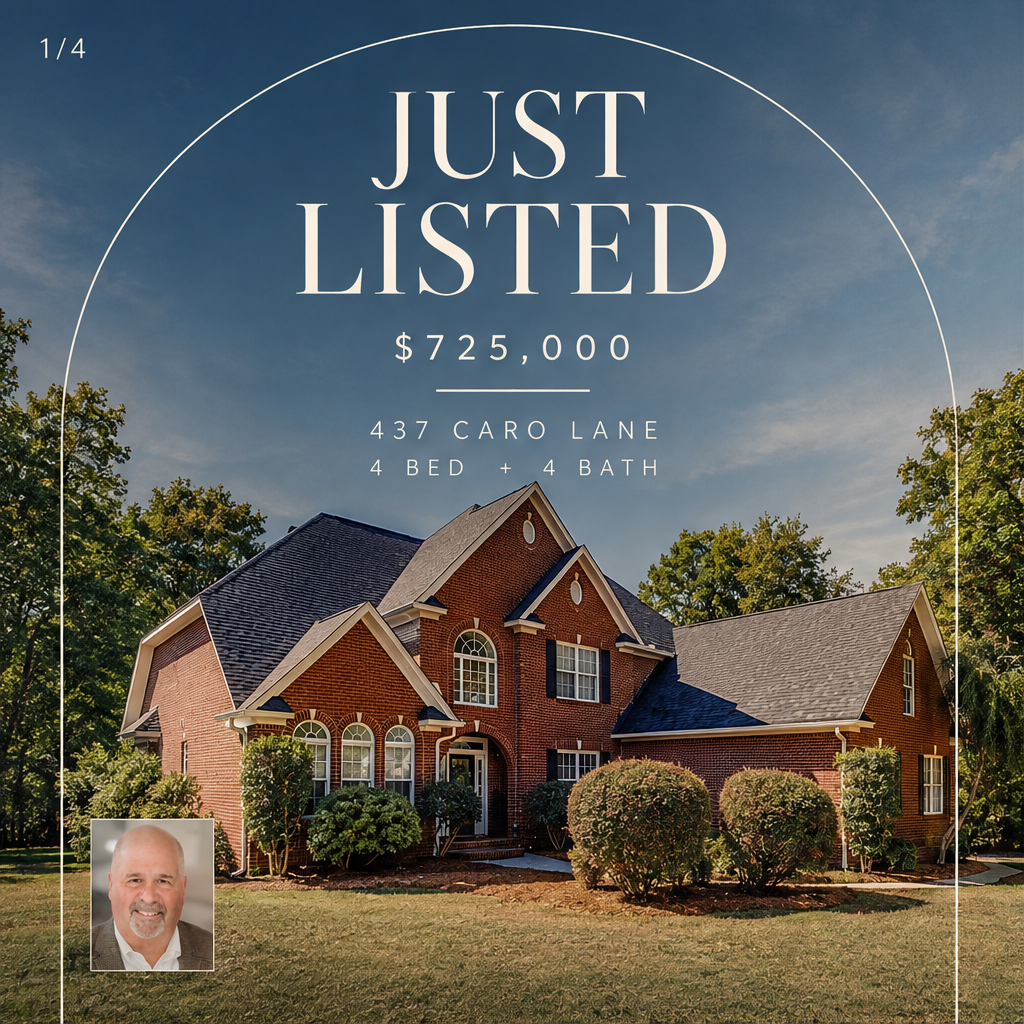
437 Caro Lane
Welcome home to 437 Caro Lane, a timeless gem in Chapin, South Carolina! Nestled in the highly desirable lakefront community of The Oaks, this elegant custom all-brick estate sits perfectly on a massive, sprawling 1.09-acre lot. Boasting an impressive 3,722 square feet of meticulously maintained living space, this home blends open-concept functionality with refined craftsmanship. Step inside to find a remarkably bright and spacious floor plan defined by custom architectural touches. The Living Areas: Gleaming, pristine flooring grounds an inviting main-level flow. A gourmet kitchen with extensive premium selections seamlessly connects to a grand formal dining room and a vaulted great room anchored by stately custom built-ins. The main-floor master suite serves as your private retreat, showcasing soaring high ceilings and beautiful, upgraded true hardwood flooring. French doors swing open to seamlessly blend indoor comfort with your outdoor paradise. The en-suite bathroom is beautifully oversized, offering a spa-like escape complete with an expansive walk-in closet. The other 3 bedrooms upstairs are spacious and tastefully decorated. The oversized FROG can be used a media center, home gym, children's playroom, or an isolated home office? The 2-car side-entry garage provides extensive storage space and features a dedicated workshop space, perfect for weekend DIY projects or additional tool organization. Step outside your Primary Bedroom or Great Room onto a large back deck where the flooring has been completely replaced. It is perfectly primed for year-round entertaining, overlooking your vast, private 1.09-acre backyard oasis. The Oaks subdivision provides an exceptional line-up of amenities including a private neighborhood boat ramp, secure boat storage, and a community swimming pool. Families will love being zoned for the top-performing, award-winning Chapin School System (Lexington/Richland School District Five). Don't miss the chance to experience the ultimate lake-access lifestyle on over an acre of pristine land. Disclaimer: CMLS has not reviewed and, therefore, does not endorse vendors who may appear in listings.
Continue to full article -
US Inventory Rebound Reached 18 States
By Mid-Q2 2024, 18 US states had more homes for sale than in 2019, marking a notable break from the post-pandemic inventory shortage.
Nationally, though, the market still remained tight, with US inventory well below pre-pandemic levels even as supply recovered in selected states overall.
The inventory increase was linked to higher mortgage rates slowing buyers and to stronger homebuilding, which left more listings available as demand cooled.
An economist said this kind of normalization gave buyers more choice and could help moderate price growth where supply had moved above pre-pandemic benchmarks.
For sellers, the shift meant more competition, making sharper pricing and stronger presentation increasingly important while market watchers tracked whether more states might follow.